The optimizer
An optimizer that does the routine work, and asks about the rest.
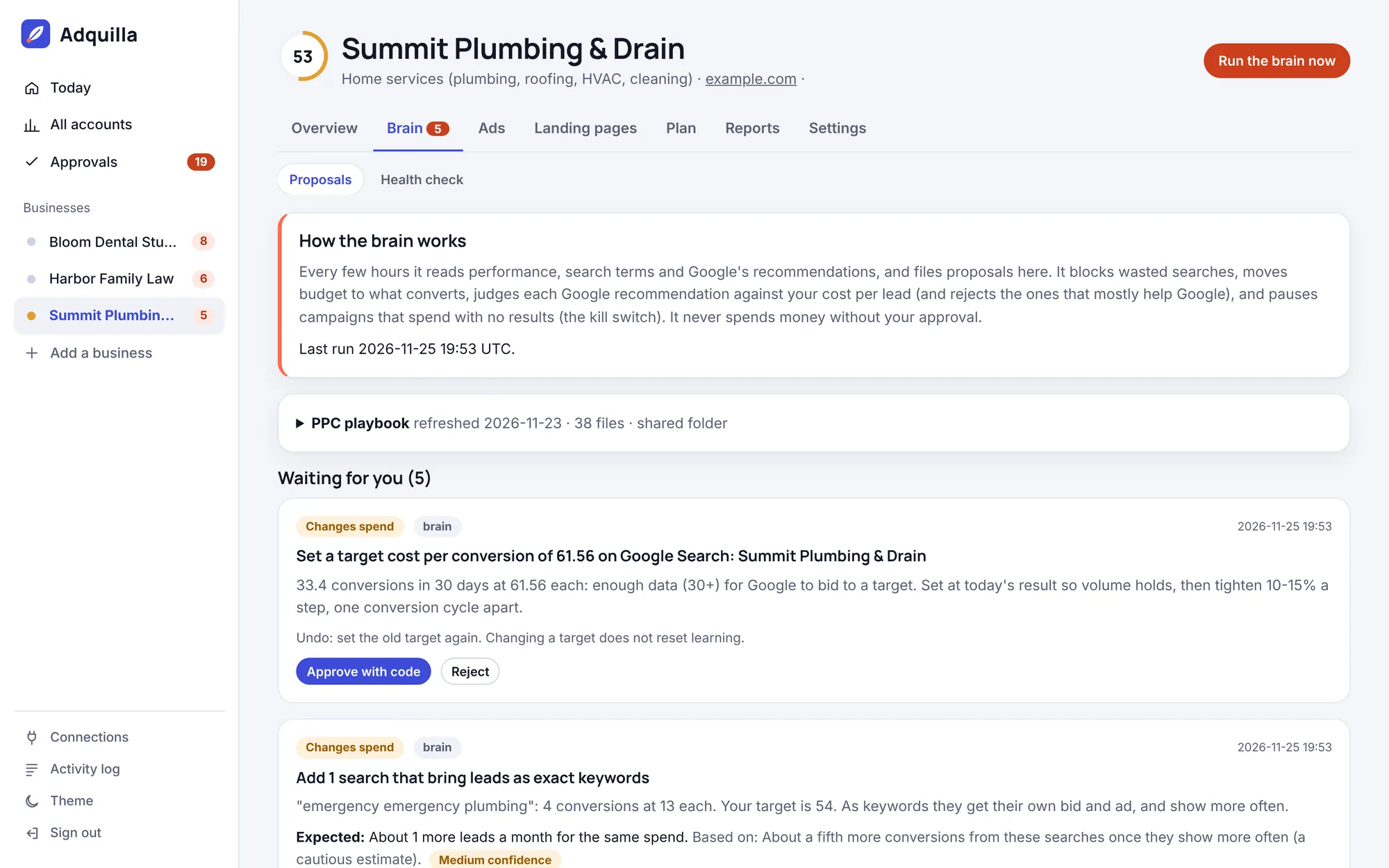
Every six hours it reads spend, searches and leads for every account, applies the changes that save money, and files everything else as a proposal with the reason and the expected result.
 123
- Says what it doesEvery run writes a summary in plain words. Nothing happens in the dark.
- Proposals with a reasonEach one shows the numbers behind it, the expected result and its confidence.
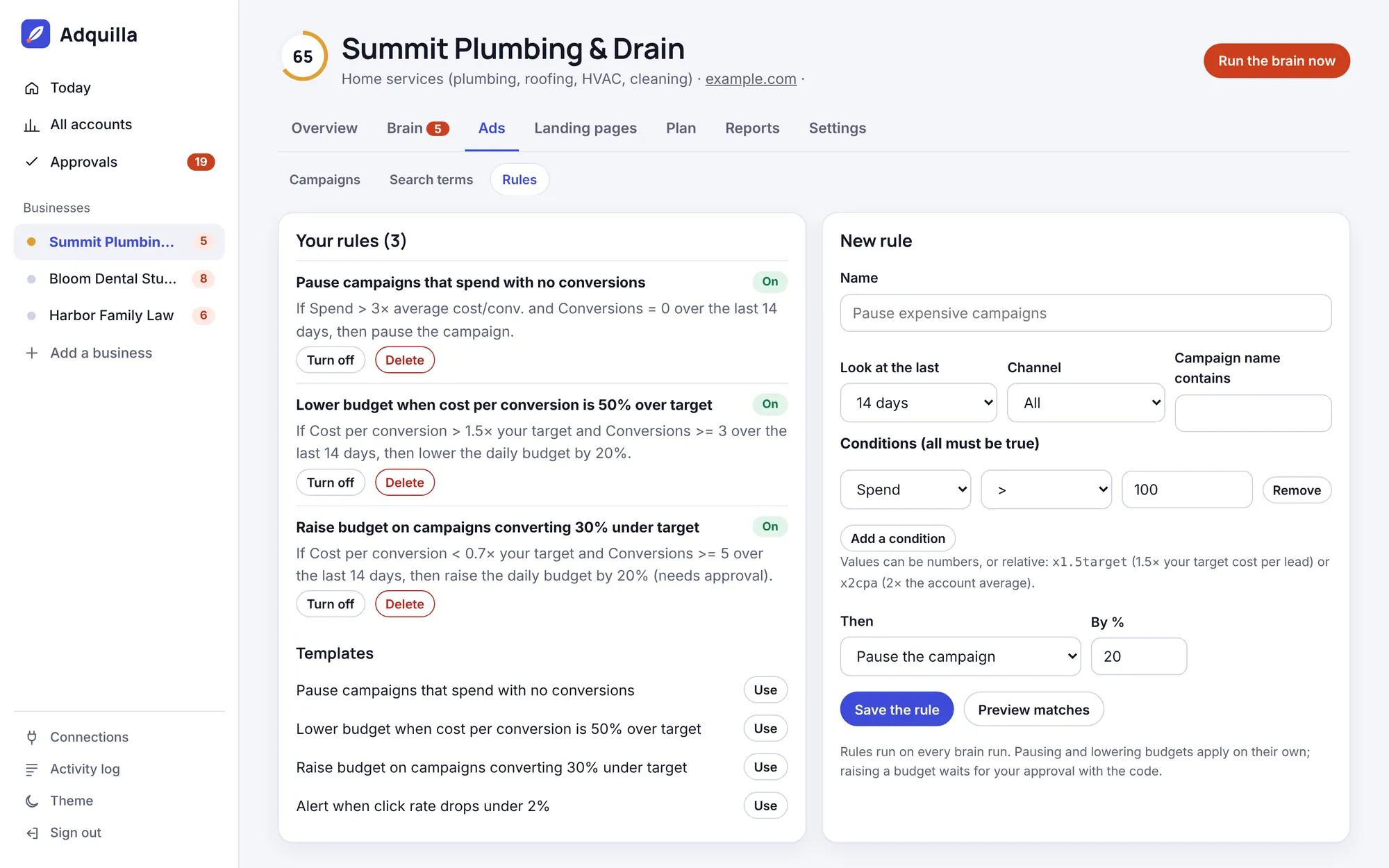
- Approve with your codeSpend changes need the 6-digit code from your authenticator app. One tap to undo.
Read, judge, act or ask, learn. Four times a day.
The optimizer compares the last three days with the fourteen before, so it reacts to a real change, not a slow Tuesday. Everything it does is logged with the before and after.
- Kill switch: pauses campaigns that spend with no results
- Moves budget to the cheapest leads, keeping the total
- Alerts when conversions stop, explained by the campaign that caused it
It reads Google's advice for you, and turns down the self-serving half.
Raise your budget. Switch to broad match. Add Performance Max. Some recommendations help you, some mostly help Google. Each one is judged against your own cost per lead, accepted when it costs nothing, and rejected with a reason when it would raise spend without more leads.
Your own rules, next to the optimizer's.
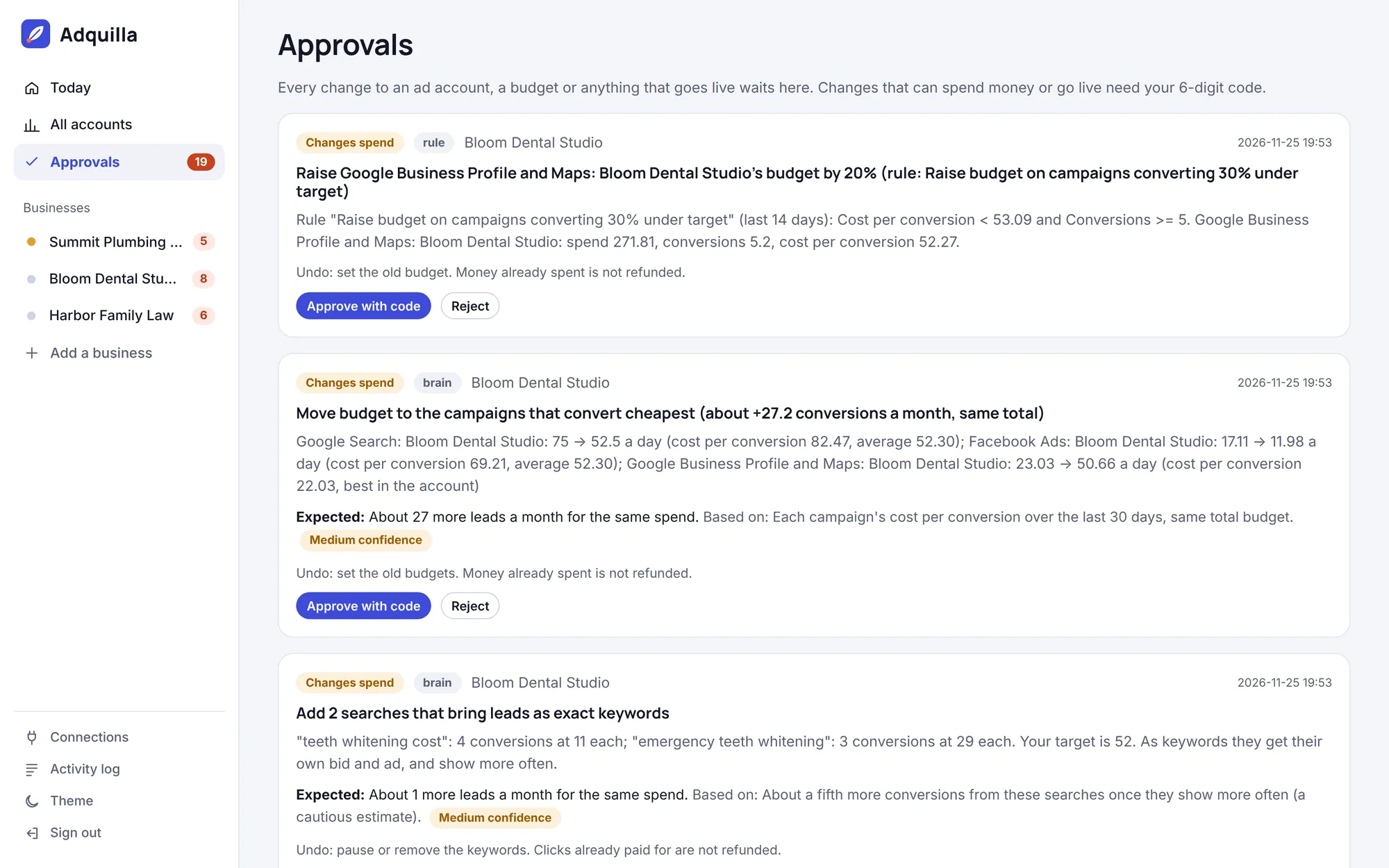
If spend is more than three times your average cost per conversion and conversions are zero over 14 days, pause the campaign. Write rules like that with values relative to your target, preview what they would match today, then switch them on.
- Conditions on spend, clicks, conversions, cost per conversion, click rate and return
- Templates for the rules most accounts need
- Raising a budget still waits for approval
The small things that add up.
Bayesian waste
A search is blocked when it has under a 10% chance of reaching your target, not after an arbitrary number of clicks.
Ad tests
Ads in each ad group are compared with a significance test, and clear losers are paused.
Target bidding when it is ready
Campaigns with 30 or more conversions get a target cost per lead set at today's result, then tightened in 10 to 15% steps.
Budget pacing
Each account is checked against its monthly budget so the month neither runs out early nor ends under.
Exact keywords from winners
Searches that bring leads become their own exact keywords, with their own bid and ad.
A change log for everything
Every change, who or what made it, and how to undo it. Clients can see it too.
Questions
Can I switch automatic fixes off?
Yes, per business. With it off, even money-saving changes wait for approval.
Who can approve spend changes?
Owners and approvers. Marketers can prepare changes but cannot approve spending.
Does it use AI?
The decisions run on rules and statistics you can read. When you connect Claude, ChatGPT or Gemini, they write ad copy, landing pages and the plain-English summaries.
See your ad plan in ten minutes.
Tell Adquilla about the business and the budget. It reads the website, picks the channels and writes the first campaigns. Free, no card.